

You’ve embarked on the journey of writing a book. Maybe it’s still an idea, or perhaps it’s close to complete. At some point you’ll have to decide how you want to share it with the world. Do you want to pitch it to traditional publishers? Should you self-publish? Or are you envisioning something in-between?
If you are a non-fiction writer you’ll want to consider how to publish early in the process. Agents and publishers sign non-fiction books based on proposals, before the book itself exists. Pitching a book idea requires up-front work on the audience, marketability, related titles, and more. If you are interested in traditional publishing, before you start writing, consider researching similar books and reading proposal guidelines from their publishers. What you learn may change your path.
When facing that early decision-making process, writers are often influenced by long-standing impressions about publishing, but how much of what you’ve heard is true? You may have heard traditional publishing framed as more real or credible than self-publishing. The do-it-yourself route has been called “vanity publishing,” which sounds a bit desperate, perhaps even reckless. The publishing industry pushes the idea that traditional publishers lend your book both quality control and legitimacy, among other benefits. Those ideas once carried a great measure of truth. With modern tools, the barriers to creating a polished book on your own are much lower than they used to be. Your choice between self-publishing and traditional publishing now focuses more on elements like the audience, topic, timing, and even your temperament.
The Trad Route
When considering reach, traditional publishers do still offer value. Services like IngramSpark make it relatively easy for self-published authors to make books available to bookstores and libraries. Availability, however, is not the same as uptake. Libraries and independent bookstores still rely heavily on trusted review channels, vendor relationships, approval plans, and publisher reputation when deciding what to acquire, and those systems tend to favor traditionally published titles. Even large publishers face competition and constraints in library and retail buying, but they benefit from established pathways that self-published authors must navigate largely on their own.
Traditional publishers also bring advantages in subrights, including foreign translations, educational adaptations, and other derivative uses (even the occasional film option). Without access to those networks, self-published authors may find it a challenge to extend their work beyond the initial book format or to reach international and institutional audiences.
For certain kinds of non-fiction, like history and biography, the existing publishing infrastructure does still amplify the credibility and longevity of your work. But traditional publishing also brings friction. You’ll face long timelines, limited control, and an incentive structure that favors market certainty (popularity) over risk (interesting niche topics). Not many people get rich by writing a book. In fact, few earn what amounts to a reasonable hourly wage for the effort involved. However, there is still a psychological pull to earning 70 to 100 percent of sales with self-publishing compared to the 10 to 15 percent royalty structure that most publishers offer.
Royalty percentages alone rarely tell the full financial story. Advances, marketing support, rights ownership, and whether the book supports speaking, teaching, or consulting income can matter more.
While you are likely to sell more copies with a traditional publisher, a deal still doesn’t guarantee your book will be widely read. It means your work will enter a system with the potential to amplify its reach. Authors also now shoulder much of the marketing work themselves, regardless of publisher size.
Self-Publishing
So is self-publishing your chance at radical freedom or a last resort? It’s nothing that dramatic. It is simply ownership (control) paired with responsibility (work).
You control the timeline, presentation, pricing, and updates. You also inherit all the work that traditional publishing renders invisible. You take ownership of details like copyright registration, editing, cover design, layout, sales, marketing, anti-piracy efforts, and reader trust.
You also assume upfront financial risk, which can be significant depending on how much editorial, design, and marketing work you outsource. If you want to offer a physical copy of the book, you’ll also shoulder printing costs.
Self-publishing works best when your understand your audience and can think beyond the content, treating it as an ongoing business rather than a single event.
For many writers, the self-publishing path offers a way to build authority and visibility, rather than immediate revenue.
Your Role
In both models, author authority plays a role. Publishers still evaluate the writer’s platform, credentials, and visibility alongside the idea itself. If you already have an online following or previously published a popular book, agents and publishers will pay more attention. At the same time, a following gives you more potential to reach readers without the help of a publisher.
The content category matters too. For example, if you are writing a history book, original research, primary sources, and your credentials matter. If you are a cookbook author, your popular following, food trends, photos, layout, and clear recipes matter more than formal training.
Beyond the Brand
A few considerations matter far more than the brand attached to your book:
Audience fit. Who is already looking for this kind of work? How will they find it, and what proof of demand exists?
Timing and longevity. Are you offering a timely topic or content with a long shelf life? How sensitive is the content to delays in publication?
Control. How much involvement do you want during and after publication? Which rights (audio, foreign, educational, derivative) do you want to retain?
Energy. Are you willing and able to manage the publishing process and promote your work? Are you able to stay motivated when your work is rejected, progress is uncertain, and no one else is setting deadlines or giving feedback?
The right publishing path is the one that best matches your goals, values, and capabilities.
Writers often imagine publishing as the final administrative step of a creative process. In reality, it is an important part of the life of your work and an extension of authorship. The way your work is released shapes who reads it, and how it is read, discussed, and remembered. Rather than a final product, your book can serve as a foundation for future work, reuse, and your long-term reputation. Viewed this way, the choice between self-publishing and traditional publishing is a strategic one that can influence the trajectory of your ideas and career.
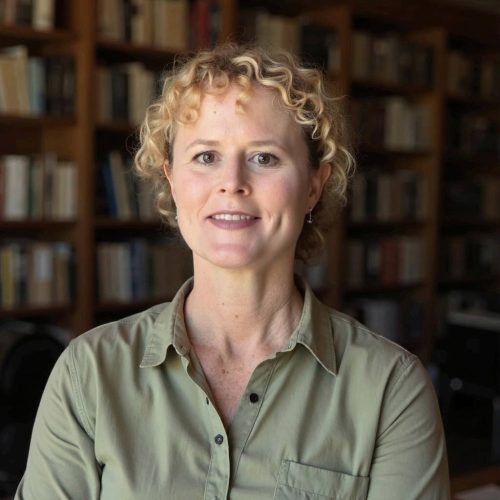
About Margaret Eldridge
Margaret Eldridge has decades of experience coaching authors and evaluating book proposals with publishers like Wiley, Manning, and The Pragmatic Programmers, and she has an insider’s understanding of what makes an idea stand out in a crowded marketplace.
