

Using Poetic Devices in Nonfiction
Here’s something you may relate to. You’ve written something true and important, but when you re-read the piece, it feels oddly still. It’s frustrating when the language doesn’t resonate, because you know there are compelling ideas rippling beneath the surface. One way to tap that hidden energy is to draw from an unexpected reservoir: poetry. If you are used to writing non-fiction, you may be skeptical, but hear me out. I hadn’t considered the deep connections between poetry and prose until I faced what seemed like a fluff assignment.
While at UNC, a poetry professor asked us to memorize and recite a poem. It felt like a trivial assignment, so I thought I’d treat it that way. I chose “Poetry” [https://poets.org/poem/poetry] by Marianne Moore. You can feel the defiance in the first line, “I too, dislike it: there are things that are important beyond all this fiddle,” which I loved. But in the class discussion that followed, we looked beyond the bold tone (the poem’s click bait) to find the motivation and meaning. In the poem, the author ruminates on the nature of poetry and its boundaries (or lack thereof), and what makes poetry valuable. Moore slips in some intertextuality in the form of a direct response to Tolstoy’s assertion that prose and poetry are distinct, and that you can’t classify “business documents and schoolbooks” as poetry. She counters that as long as poetry is authentic and tethered to the real world, any subject in the hands of a talented poet is fair game. She is also saying that the point of poetry is to encapsulate an idea and make people feel something genuine.
And can’t the same thing be said for prose, and non-fiction in particular? There are many opportunities for crossover. When good writers capture the essence of a topic and make it real, you feel a spark, a sense of satisfaction, and often a connection. Meaningful writing tends to be grounded in real-world experiences and feels authentic.
There’s also an argument for applying the techniques of poetry to non-fiction in service of particular goals. For example, when you create a rhythm of repeating internal vowel sounds, the effect can be sorrowful or soothing. Assonance “rounds and rounds despair to drowning.” To be fair, that line from “Inversnaid” by Gerard Manley Hopkins, packs a triple threat of assonance, consonance (repeating internal consonants) and alliteration (where initial sounds of words repeat).
Repeating sounds are powerful and striking. Consider “Five score years ago a great American in whose symbolic shadow we stand today signed the Emancipation Proclamation,” from MLK’s “I Have a Dream” speech. Even if you don’t consciously notice the alliteration of the ‘s’ sounds, the opening mesmerizes. In fact, the entire speech, packed with metaphors, rhythm, and repetition feels hypnotic.
What other tools can we add to our arsenal? Onomatopoeia, where a word imitates sound, brings to life the buzz of bees in a garden or the hoot-who-who-who of a barn owl. Such language has the added benefit of making ideas sticky. Readers are more likely to remember writing that makes a visceral connection.
Metaphor, expressing an idea via a powerful symbol, can be so sticky and powerful that phrases lodge in our lexicon, often without recalling the original source. Consider for example the “iron curtain” coined by Churchill or “the great melting pot” from a 1908 play by Israel Zangwill. We are constantly creating new metaphors to encapsulate ideas. Modern examples include “carbon footprint,” (coined in the 1990s) and “dumpster fire (origin unknown).”
There’s much more to explore in poetic techniques. You may be familiar with repetition, parallel construction, irony, understatement, and hyperbole. But there’s a treasure trove to waiting with additional poetic devices like allusion, meter, conceit, metonymy, synecdoche, and paradox.
Maybe you have never written a poem. Maybe you even dislike poetry. Still, there are plenty of lessons to learn and poetic tools that can make your writing more powerful.
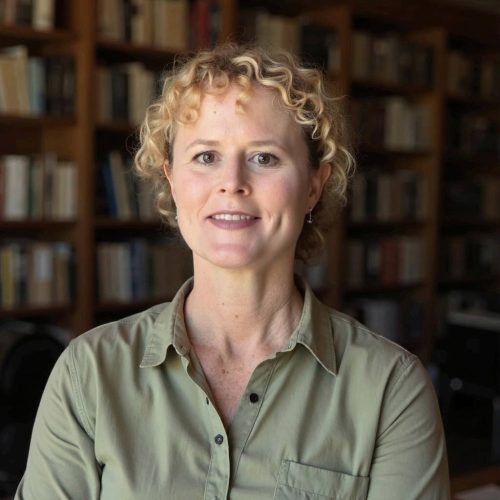
About Margaret Eldridge
Margaret Eldridge has decades of experience coaching authors and evaluating book proposals with publishers like Wiley, Manning, and The Pragmatic Programmers, and she has an insider’s understanding of what makes an idea stand out in a crowded marketplace.
