My mother had a word to describe me when she talked about me to anyone who was listening: nosy.
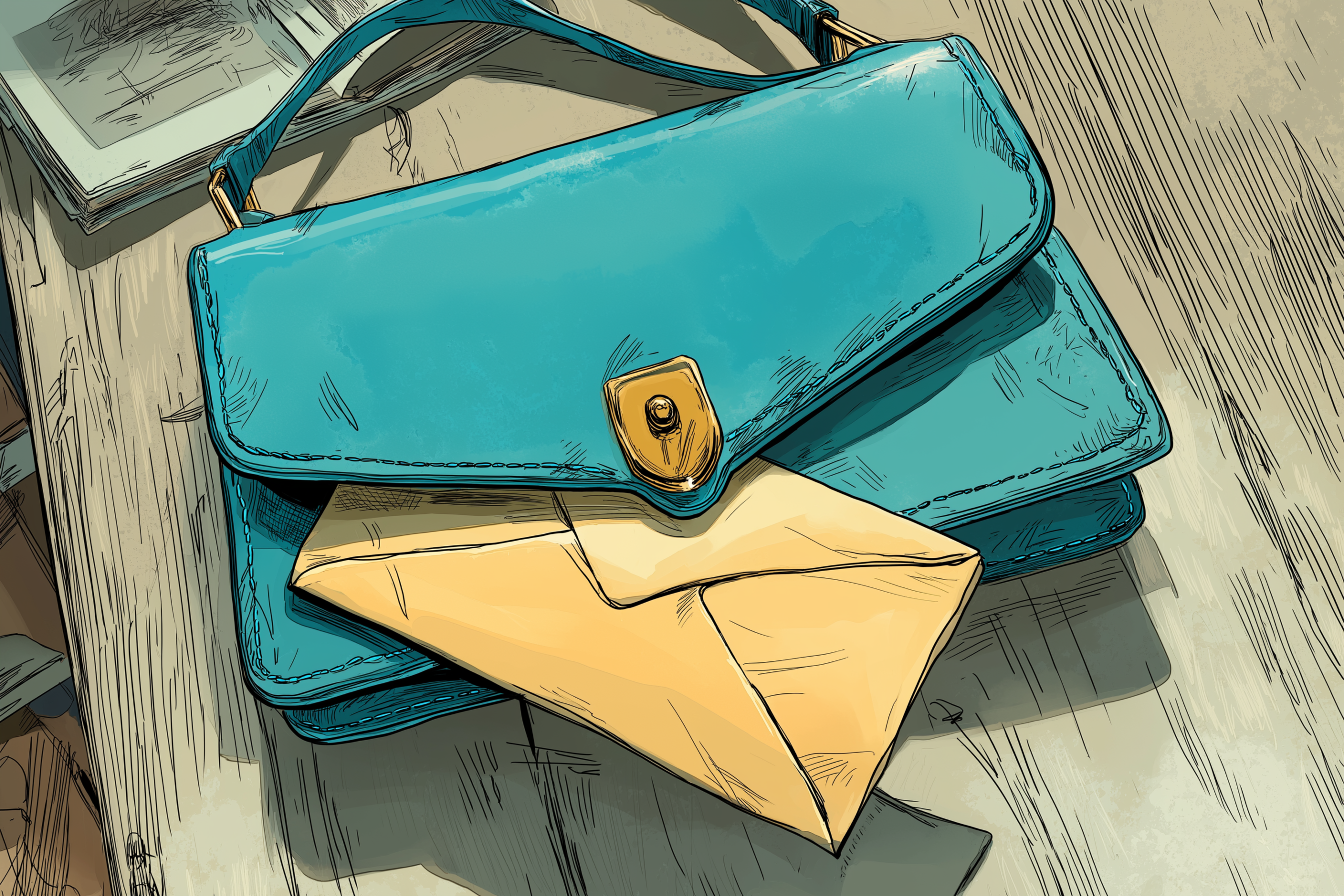
My aunt, her sister, would always tell this story of when I went into my mother’s purse and took out a letter to read it. Didn’t care that the letter wasn’t for me or about me; I just wanted to know what it said. I don’t remember doing that, but that doesn’t mean my aunt made it up, because me doing something like that sounds entirely like something I would do, back then and, yes, even now.
But I wouldn’t call myself nosy, though. I think curious is much more accurate. I wasn’t necessarily trying to get into other people’s business; I was only five. What was I going to do with that information? I just liked knowing stuff. I especially liked reading, not just because the books were enthralling but because I learned things from reading anything and everything. How else would I have known at a young age that the human body had 206 bones (shout out to Charlie Brown’s ‘Cyclopedia: Super Questions and Answers and Amazing Facts, Volume 1)?
So I really shouldn’t be surprised that I landed on becoming an editor as my career. I get to read AND learn AND get paid to do it.
So what does all of this have to do with critical thinking and why it’s important to take a critical approach to reading? I’ll make it make sense. I promise.
To be a critical thinker as a reader means we need to be curious, willing to learn, ready to ask relevant, meaningful questions, be skeptical, and be able to distinguish fact from opinion. With critical thinking, anything and everything is subject to scrutiny. We use it every day, even when we’re deciding what to have for breakfast or whether to have breakfast at all (“I don’t need to leave for another hour; I have time to toast a bagel and make some coffee,” or “I’m running late and I don’t have time to stop anywhere to buy something, so I’ll have to settle for what’s in the break room”). Multiple thoughts are running through our heads and informing our decisions, and it happens so fast that we’re not even aware that we’re asking and answering questions, evaluating, and judging. We’re critically thinking about those IHOP pancakes.
Let’s take it further. Critical thinking is about nurturing that curiosity, embracing it the way we did as kids–asking why until it drove every adult around us up the wall. It means not taking everything at face value and asking who, what, why, and how questions: “Who is saying this thing?” “What proof can you provide that supports your claim?” “Why do you believe that?” “How do you know this thing happened?” All of these questions come with a respect for knowledge and respect for others. We’re not “just asking questions,” which some have somehow decided is a form of critical thinking. In many cases, it’s not. It’s a bad faith way of playing devil’s advocate where the person asking actually doesn’t care about the answer; they just want to be contrary or push a narrative. They’ll try to drag you to their side, many times with logical fallacies, lacking reason and distorting the information or taking on a “trust me, bro” mentality.
There also tends to be an inherent lack of respect for the person being asked and the knowledge being questioned.
And this is where taking a critical approach to reading (or anything really) can counteract or weed out those bad-faith questions. When we encounter something that really captures our attention in a text, we can ask, “Why is this important? Does this ring true? Where did this information come from? Is there something here that the author may not be considering? Is there something here that I may not be considering? Asking real, purposeful questions will lead to well-informed answers and better understanding. We don’t just end up accepting whatever we see or read just because someone else says it’s true.
We also need to be willing to admit that we don’t and can’t know everything. Ego doesn’t get to play here. Our beliefs might get challenged and our biases exposed, and that’s okay. That’s what lifelong learning is all about. We learn more about the world and about ourselves in the process.
So, pick up that book, or blog, or whatever, and be curious. You’ll be better for it.
About Adaobi Obi Tulton
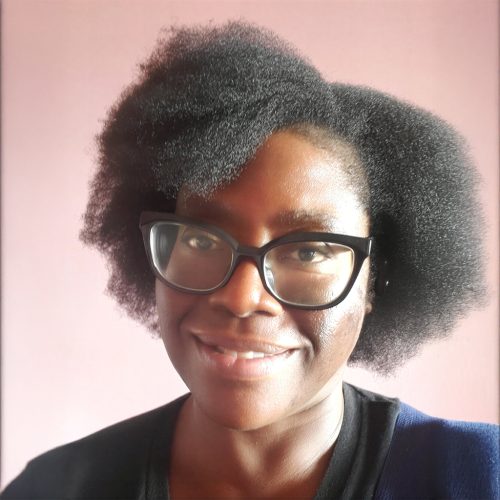
Adaobi Obi Tulton is a freelance editor and the owner of Serendipity23 Editorial Services, bringing with her many years of experience in nonfiction editing. She began her career as a manuscript coordinator for the Journal of Cell Biology at Rockefeller University before becoming a project editor for Wiley, where she worked on computer technology titles. She then transitioned into full time freelancing, doing developmental editing, copyediting, and proofreading for publishers such as The Pragmatic Programmers, Hachette Book Group, and Hay House.
Across her career, Adaobi has helped authors bring clarity to complex ideas, refine their structure, and express their expertise with confidence. She approaches nonfiction editing with steadiness and care, offering the kind of calm, steady guidance that helps authors feel both supported and understood. She brings a quiet editorial discernment that helps them evolve ideas into their clearest form.
Outside of editing, Adaobi indulges in slow, restorative hobbies that match her approach to editing: deliberate, attentive, and grounded. Knitting remains at the top of her “someday soon” list.