
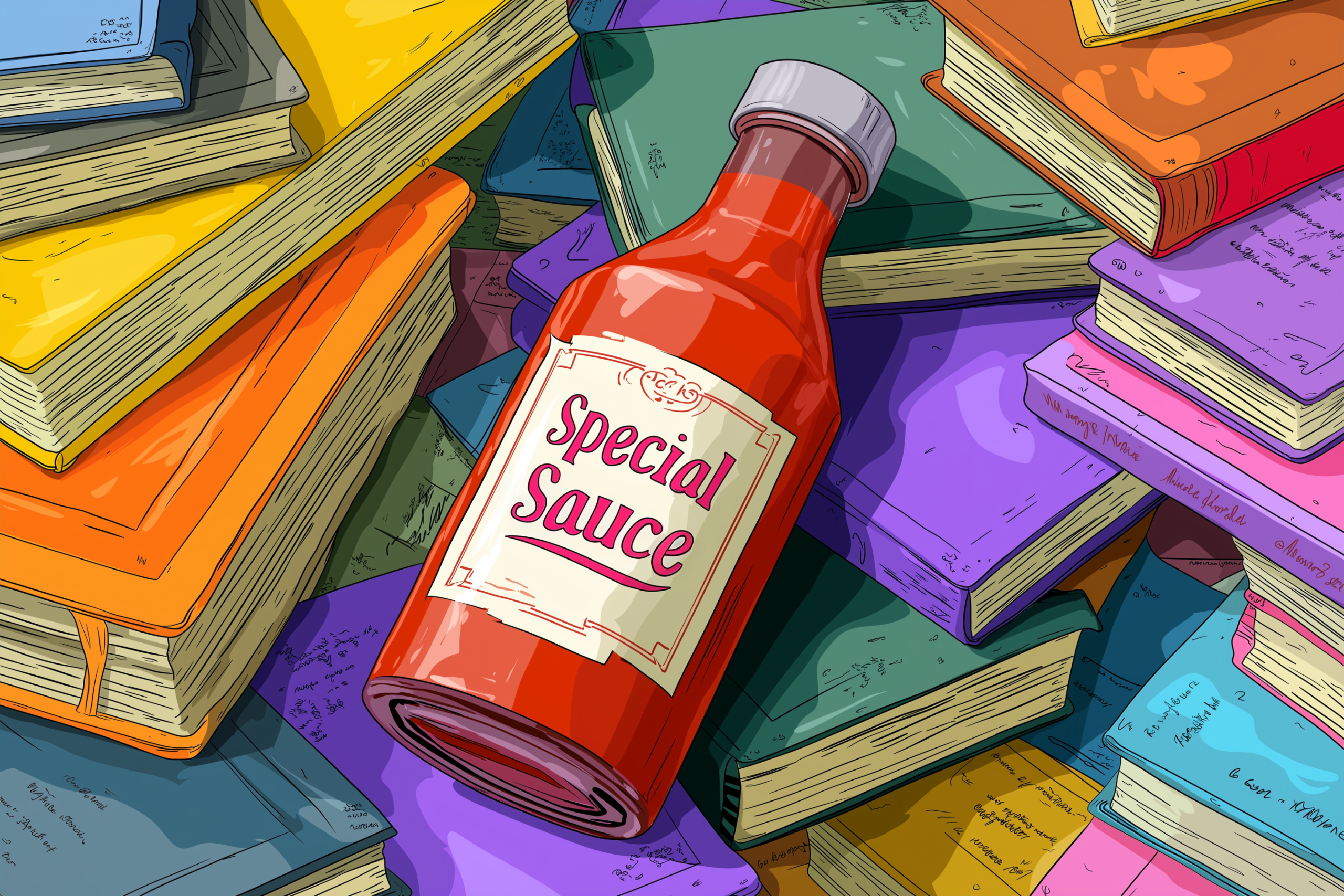
Words + Special Sauce = Connection
You went to a top twenty university, graduated at the top of your class as a writer, and had a successful career as an editor. Then you poured your heart out like cake batter in a zine on Medium, but your top earning article made just $1.60. What went wrong? Don’t judge yourself like that, please! A whopping 93 percent of writers on Medium earn less than $100 a year. Still, you want to practice your craft in a meaningful way. What does that look like?
It looks like making a connection. The truth is that people respond to other people. We are emotional beings. So while information is important, without an emotional connection and trust, your audience drifts away. If writing is more than a hobby, you want readers to keep coming back.
But that can seem mysterious, even magical. Don’t despair. There are some concrete strategies you can try to make a lasting connection with readers. Let’s begin with the assumption that you are an expert in what you are writing about or have researched it thoroughly. You have a clear idea of the audience and the topics you want to share.
Start with a problem or purpose. What truth do you want to get at or what problem do you want to explore? Your piece needs a guiding star, but you don’t need to have all the answers. Part of the connection you make is via your own curiosity, uncertainty, and unanswered questions. Lack of answers creates vulnerability or empathy for your struggle that people connect with. Be careful about making yourself the center of the narrative though. People need to also see themselves to feel a bond.
Try starting with a moment of tension or a decision. Ask a question readers might be asking themselves. Tell a brief story that represents the larger issue. Ground the issue in something real first, and widen to abstractions later.
Make your presence as the narrator known by sharing your reactions. Ideally, you want to convey honesty and vulnerability related to an insight. The reactions can be physical (eye roll, hugs), cognitive (really?, LMAO), or emotional (outrage, broke my heart). Show small changes in your attitude or understanding. For example, “Now that I think about it, no one really wants to hear my opinion about frosting” (true). Reactions let readers know a person is behind the words.
While reactions may not fit every piece, personality plays a part in the reader-writer bond. You can also convey who you are through word choice, rhythm (like short sentences, long sentences, mix), active versus passive constructions, unique turns of phrase, and even new words. Establish a voice that is uniquely yours through conscious choices. Read what you wrote aloud. Does it sound like you?
Now let’s get to specifics. While I was in college, I had lunch with Annie Dillard, author of The Writing Life, and among other advice, she emphasized the importance of visceral details where “the line of words is a hammer.” If you read her writing, you’ll see it is chock full of dizzying details. The impression I got is that she goes through life in careful observation of every spider web and every step the spider takes that shakes the web. For those of us who are not hyper-observant, the details are challenging. But make the effort with me—the reader’s imagination is thirsty for details.
Details can be a story that reveals a new layer of the problem or purpose central to your piece. Or maybe you zoom in on a funny quirk, like your cat’s obsession with desiccant packs and how her antics keep you grounded and laughing. The dirty details of a mishap and the butterfly wings of joy link you to other humans. Use details to unpack the central points with honesty, emotion, and a hint of vulnerability and you’ll be on a path to connection.
Once you’ve expressed your ideas, invite readers to participate. What do you want them to do with the information? Think about a problem, ask a question, add to the dialog, take some action? If you can, give them a takeaway while avoiding being too pedantic or prescriptive. You don’t want it to seem like a homework assignment (unless you are writing a text book).
Finally, don’t forget the polish. Take another look back at your work. Did it take the shape you had hoped while conveying your central point with care and to the level of completeness you had hoped? Do you see any missed opportunities to make the writing more relatable?
Here’s something to try. After your next draft, read it aloud and pinpoint where you think your voice shines. Highlight a moment where your humanity or humor comes through. Then ask a trusted friend to read it and have them highlight their favorite parts. Do their highlights match yours?

About Margaret Eldridge
Margaret Eldridge has decades of experience coaching authors and evaluating book proposals with publishers like Wiley, Manning, and The Pragmatic Programmers, and she has an insider’s understanding of what makes an idea stand out in a crowded marketplace.
