
You’re reading this because you have an idea for a book, maybe a work already in progress.
At this stage, most authors have put a lot of thought into their book’s content, but haven’t considered the book as a physical (or, in the case of ebooks, virtual) object. Maybe you’ve imaged it, but not really given it careful, detailed thought. Looking at the book as an object, a product that customers will buy, is an important part of developing your work. It will help you find a publisher and set realistic parameters for word count, format, and other attributes.
A great place to start is in a bookstore, a library, online catalogs, or even your own bookshelf. When your book is done, which books will be next to it on the shelf? Look at the books on similar topics to yours. Who published them? Those are the publishers you should consider approaching with your proposal—they’re the ones that know the market for what you’re writing about.
How long are most books in your subject area? That will give you an idea of how long yours should be. For print books especially, page count directly affects the price, and price point can have a big impact on your book’s marketability. Be sure to look at the “average” books, not that best-seller by a big-name author that will sell even if it’s really long. You may get there some day, but those big names started small—look at their first books, not the current ones.
Pro tip: Think about word count, rather than page count, because page count varies with formatting.
Want to quickly estimate a book’s word count? Open to any page and count the words in two or three lines to get a “typical” line length. Count the number of lines on a page and multiply by the line length to get the “typical” words on a page. Then multiply by the number of pages, not including the index. That will give you a ballpark figure for the word count in that book, and probably for most books from that publisher.
While you’ve got some of those books open, read a little bit to get a feel for writing styles. You’ve probably already read books in the subject area that you’re writing about, but you may not have thought about style before. The books that are for sale now—are they light and conversational? Dense and scholarly? If you find a variety, focus on books that are similar to your own style and make note of the publishers. Or, think about tailoring your writing style to be attractive to the publishers where you think your book will be the best fit.
Do books in your category tend to be heavily illustrated? You may not want to deal with illustrations—or maybe you do, and that’s a really important part of your book concept. If some are illustrated and some aren’t, look at the publishers. Usually, a given publisher will favor one style, illustrated or not. Focus on the publishers that produce what you want to create.
Take a look at the titles you hope to be on the shelf with. Long and technical? Short and to the point? Deadpan or dramatic? You’ll work with your publisher to come up with a title for your book, but it helps to have an idea of what readers might expect—and their expectations are based on what they’ve already read.
Same for the cover art. Your publisher will have guidelines for that, but it doesn’t hurt to think about what others look like. Are they hardcover or softcover? Again, this won’t be your own decision, but it will help to set your expectations.
What if there are no other books like yours? Well, that’s a warning sign. In the world of product design, “nothing else like it” may mean that there’s no market for it. If your goal is simply to get information into print, there are publishers who specialize in low-volume books, or you can self-publish. But if your goal is to sell books, you need a topic and a style that is already proven to sell. Publishers know what works, and the examples are right there for you to study.
Thinking of your book as a product may seem cold and calculating, not aligned with the creative mindset that led you to start your writing journey. But it’s important to have the end in mind early in the process. If you’re planning to write a book, thinking about the final product, not just the content, will make the process easier by defining some of the boundaries. And the best way to get a clear picture of your final product is to look at what’s already on the market.
Looking at existing books will help you determine which publishers to approach. Knowing what they’ve already published tells you what they’re looking for and gives you a guide to writing good proposals. Your book will be a product someday. Start thinking about it as a product now.
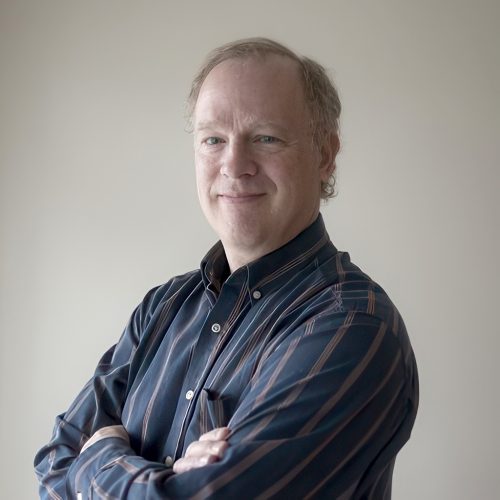
About Don N. Hagist
Don N. Hagist has written several books on the American Revolution, and edits works on both history and software engineering. He gives lectures on history, and has worked as an advisor for the Ken Burns The American Revolution on PBS and other television documentaries.
Having established himself as a recognized historian while maintaining a career in software engineering, Don likes to share his insights and expertise on writing and public speaking.